What Is an AI ATS? A Plain-English Guide for HR Teams
"AI ATS" gets used as a marketing label more often than it gets explained. Here's what the AI part is actually doing under the hood, using real product examples.
What Is an ATS, Actually?
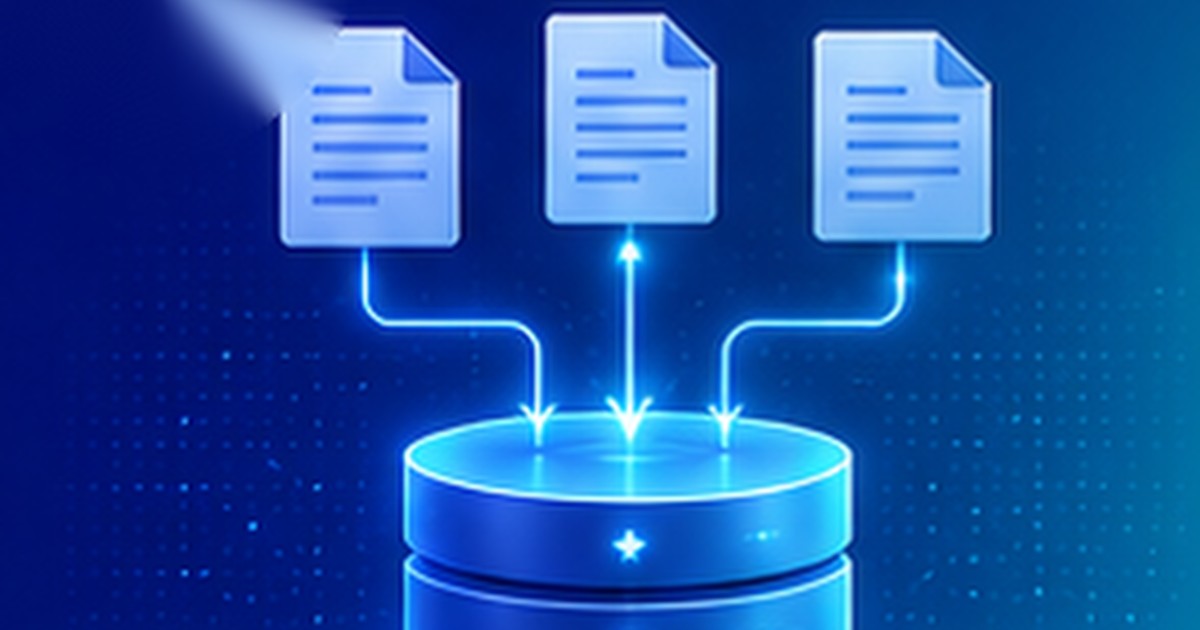
An applicant tracking system (ATS) is software that manages the hiring pipeline: job postings go out through it, applications come in through it, and candidates move through defined stages — applied, screened, interviewed, offered — inside it. Before ATS software existed, HR teams tracked this in spreadsheets or email threads. The core job of an ATS hasn't changed much: keep every candidate's status, notes, and history organized in one place instead of scattered across inboxes.
What's changed over the last several years is that most modern ATS platforms now have AI layered into that pipeline-tracking core. That's what "AI ATS" refers to — not a different category of software, but a plain ATS with AI-assisted capabilities added on top of the same underlying pipeline-tracking function.
What Does the "AI" Part Actually Do?
In practice, "AI" inside an ATS usually breaks down into two or three distinct capabilities, and it's worth knowing which one a given vendor is actually describing:
Resume parsing. This is the most foundational piece: turning an unstructured resume file (a PDF, a Word doc, wildly inconsistent formatting) into structured, searchable candidate data — name, work history, skills, education — that the system can actually query. Manatal's feature set describes this directly: "AI resume parsing and structured candidate profiles." Without parsing, none of the AI capabilities that come after it — ranking, matching, search — have structured data to work from.
Ranking and matching. Once candidate data is structured, the system can compare it against a role and produce some form of fit signal. This is where vendors differ most in sophistication. Manatal offers "AI-based candidate-to-role recommendations" that improve as the system is used. Workable goes a step further with what it calls semantic matching — understanding candidate fit based on meaning and context rather than only exact keyword overlap, paired with a full applicant tracking system underneath it. Semantic matching is meant to catch a candidate whose resume says "led a cross-functional engineering team" for a role searching "team management experience," where a pure keyword match might miss the connection.
Automation on top of ranking. Some platforms extend AI beyond scoring candidates into taking action on them. Recruiterflow's AIRA tier (a separate, custom-quoted layer on top of its base Platform plan) includes an AI Notetaker, an AI Matchmaker, and an AI Submission Agent — the latter specifically aimed at cutting the time recruiters spend writing candidate submission emails to clients, which is a very agency-specific workflow. This is a good example of AI in an ATS moving past "help me screen" into "help me do the next task after screening."
AI ATS vs. a Plain ATS: What Changes
A plain ATS is fundamentally a record-keeping and workflow tool: it tells you where each candidate is in the pipeline and stores their information. An AI ATS adds a layer of triage and prioritization on top of that record-keeping — surfacing which candidates in a large pool are most worth a recruiter's limited time first, based on parsed resume data and some form of matching logic.
What doesn't change is who makes the actual hiring decision. Every AI ATS on the market, including the three referenced here, positions its AI as a way to prioritize and speed up a recruiter's review — not to replace a human's final judgment on who to interview or hire. That distinction matters both practically and, increasingly, for compliance purposes in some jurisdictions.
What This Looks Like in Practice
These three tools are a useful illustration of how differently "AI ATS" plays out depending on who a vendor is building for:
Manatal is built for small teams and agencies (its published company-size targeting is 1-10 and 11-50 employees) making their first structured hires. Its AI resume parsing and candidate recommendations, plus a built-in career page builder, are aimed at getting a small team a working, AI-assisted pipeline fast — most teams are live within a day — without the reporting depth or workflow complexity that a larger organization might need.
Recruiterflow is built for recruitment agencies juggling multiple concurrent client roles. Its base ATS-plus-CRM layer already includes AI candidate ranking, but the agency-specific value shows up in AIRA's submission automation — a direct response to a very specific, repetitive agency task (writing candidate submission emails to clients) rather than a generic screening feature. See our Manatal vs Recruiterflow comparison for the full head-to-head.
Workable is built for businesses moving from ad-hoc hiring into a structured, repeatable process as they scale (its published company-size targeting spans 11-50 through 201-1,000 employees). Its semantic matching is paired with a full ATS, structured interview kits, and hiring analytics — reflecting a mid-size company's need for consistency across many hiring managers, not just speed for a single recruiter. See our Manatal vs Workable comparison for how it stacks up against a more accessible ATS.
What AI in an ATS Doesn't Do
It's worth being direct about the limits here, since vendor marketing doesn't always volunteer them. Accuracy claims for AI screening and matching vary by vendor and generally aren't independently benchmarked — a vendor's own published accuracy percentage, where one exists, is a claim from that vendor, not a verified figure. An AI ATS also doesn't remove the need for a defined hiring process; it's a layer on top of one. And parsing quality still depends on resume input — heavily formatted or unusually structured resumes can parse less cleanly than plain-text ones, regardless of vendor.
Tools Mentioned


Frequently Asked Questions
They overlap but aren't identical. Resume screening — parsing, ranking, and matching candidates — is typically one feature set inside an ATS, not a separate category of software. An ATS also handles things a standalone screening tool doesn't, like job posting distribution, pipeline stage tracking, and interview scheduling. Manatal, Recruiterflow, and Workable are all full ATS platforms with AI screening features built in, rather than screening-only point tools.
No. Every AI ATS referenced here is positioned as a way to help a recruiter prioritize and move faster through a candidate pool — parsing resumes, surfacing likely-fit candidates, or drafting submission emails — not as a replacement for a human making the actual interview or hire decision.
It varies significantly by who the platform is built for. Manatal starts at $15/user/month, aimed at small teams and agencies. Recruiterflow's Platform plan starts at $149/user/month, with its AI-agent tier (AIRA) custom-quoted on top for agencies wanting automation. Workable starts at $299/month on its Standard plan, scaling to $599/month (Premier) and $719/month (Enterprise) as a business grows.
This isn't independently verified in our research — accuracy claims come from each vendor and aren't benchmarked against each other or against human screening outcomes in this comparison. What is verifiable is what each tool's ranking is based on: Manatal's recommendations improve with usage, and Workable's semantic matching is explicitly built to go beyond keyword matching. Treat any specific accuracy percentage a vendor publishes as their own claim rather than a confirmed figure.
Want tool recommendations in your inbox?
Related Articles
Spot something wrong?
If any information in this article looks outdated or incorrect, let us know via the Contact page — we review every correction request.