Workday Review
Comprehensive global HCM suite spanning HR, payroll, benefits, and workforce planning
Starting at
Custom / Enterprise
Best for
Large, complex, often multinational organizations wanting one unified system for HR, payroll, and workforce planning
Quick verdict: Workday is best for large, complex, often multinational organizations wanting one unified system for hr, payroll, and workforce planning — solid, with one trade-off worth reading before you commit.
Custom / Enterprise
The rating shown is a third-party rating from G2 (1,464 reviews), not an AI HR Atlas score — we have not independently tested this product. Our verdict below is based on publicly available research, not first-hand evaluation.
Workday is a comprehensive, unified HCM suite spanning core HR, payroll, benefits, time and attendance, recruiting, compensation, and workforce planning — built for large, often multinational organizations with complex HR needs. It holds a 4.1/5 G2 rating from over 1,400 reviews, with nearly three-quarters of reviews coming from enterprise-segment customers. It doesn't publish pricing directly; real-world purchase data suggests an average annual cost around $49,000, though treat that as directional third-party data, not an official figure. AI HR Atlas has not independently tested this product.
Pros & Cons
Pros
- Comprehensive suite spanning core HR, recruiting, compensation, benefits, time & attendance, and learning in one unified data model
- 4.1/5 G2 rating from 1,400+ reviews, with 74.7% of reviews from enterprise-segment customers
- Built specifically for adaptability and scale across large, complex, global organizations
Cons
- No published pricing — real-world purchase data suggests an average annual cost around $49,000, but that's directional third-party data, not an official Workday figure
- Implementation is a genuine multi-month (often multi-year) undertaking, not a quick setup
Key Features
- Unified HCM data model (HR, payroll, benefits, time & attendance)
- Workforce planning and recruiting
- Compensation management
- Global, multi-country compliance support
Pricing
Enterprise
Custom
Large, complex, global organizations
- Full HCM suite
- Workforce planning
- Global compliance
Screenshots
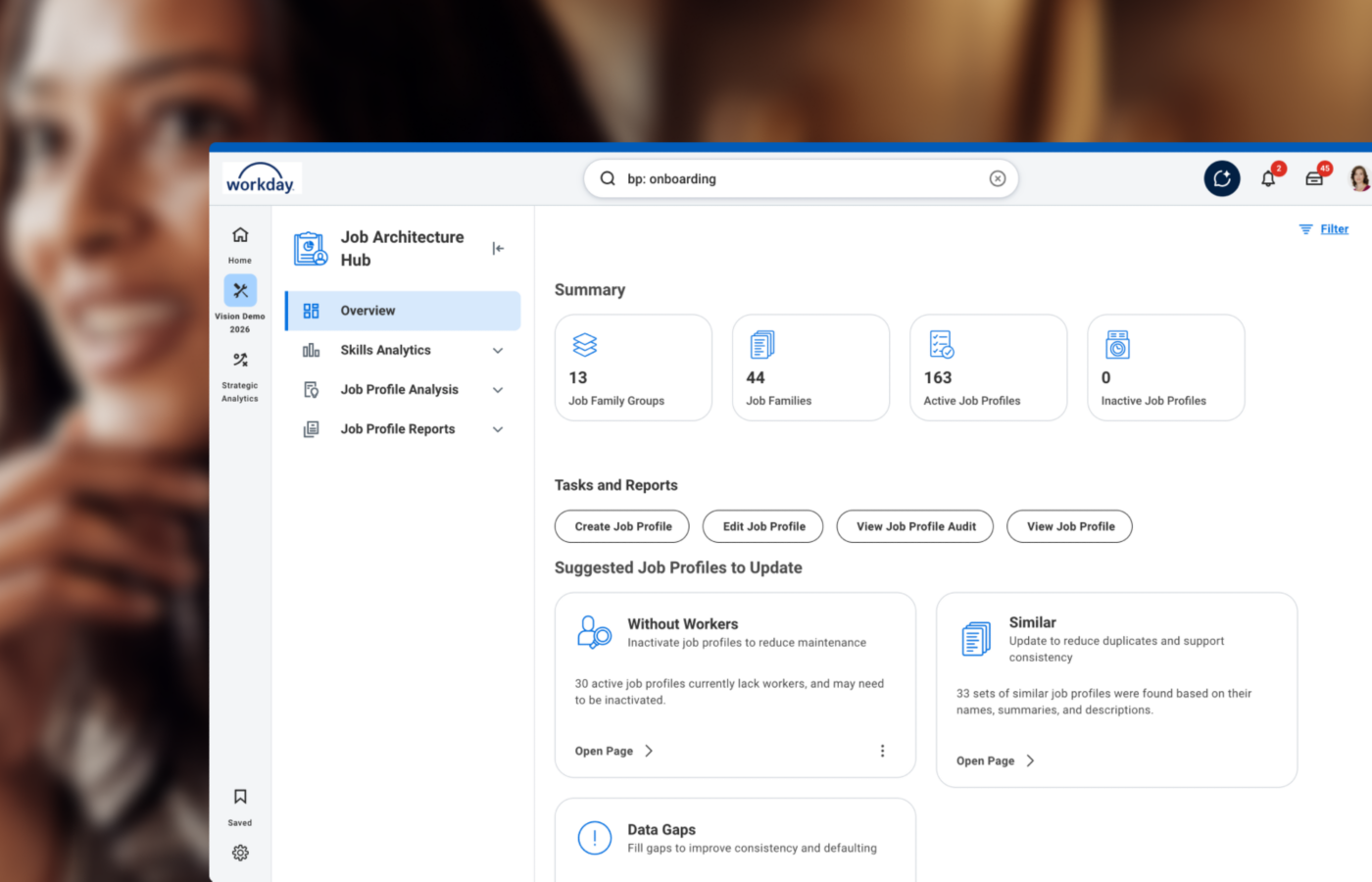
Official product screenshots published by Workday, not independently captured by us — see our Methodology.
Integrations
Integration list reflects what we found in vendor documentation at time of research — always confirm current integration depth directly with Workday before purchasing.
Customer Support
We haven't independently verified Workday's specific support channels, hours, or SLA tiers yet. Confirm current support details directly on Workday's website before purchasing.
Security & Compliance
- Global, multi-country compliance support
These are claims found in Workday's own materials during our research, not an independent security audit — confirm current certifications directly with the vendor before handling sensitive HR data.
Ready to try Workday?
Get in touch to see if it's the right fit.
Some links on this page are affiliate links — see our Affiliate Disclosure. This never affects the verdict above; see our Methodology.
Alternatives to Workday
Comparisons Worth Reading
Related Reviews



Related Coverage
Frequently Asked Questions
Generally no — its pricing, implementation depth (often multi-month to multi-year), and feature breadth are built for large, complex, often multinational organizations, not smaller teams.
Workday doesn't publish official pricing. Real-world purchase data suggests an average annual cost around $49,000, but this varies enormously by company size and modules selected, and should be treated as directional only.
Our Verdict
Worth a LookWorkday looks like a fit for large, complex, often multinational organizations wanting one unified system for hr, payroll, and workforce planning. It's worth considering, with a real trade-off to weigh before committing — check the Cons above.
This verdict is based on publicly available research — vendor documentation, pricing pages, and third-party reviews — not first-hand, hands-on testing.
Workday
Custom / Enterprise