
ChartHop Review
Real-time org chart and people-analytics platform with transparent per-employee pricing
Starting at
$5/employee/mo
Best for
Scaling startups and mid-sized companies needing clear headcount planning and org visibility
Quick verdict: ChartHop is best for scaling startups and mid-sized companies needing clear headcount planning and org visibility — we'd recommend it without reservation for the profile below.
$5/employee/mo
The rating shown is a third-party rating from G2 (250 reviews), not an AI HR Atlas score — we have not independently tested this product. Our verdict below is based on publicly available research, not first-hand evaluation.
ChartHop is a real-time org chart and people-analytics platform built around visualizing team structures, reporting lines, and headcount plans before you commit to them via sandbox planning environments. It publishes real starting pricing — $5/employee/month, with a $9,000 annual minimum contract — and holds a 4.4/5 G2 rating from roughly 250 reviews. It's positioned for scaling startups and mid-sized companies specifically. AI HR Atlas has not independently tested this product.
Pros & Cons
Pros
- Real, published starting price — $5/employee/month — genuinely transparent for a people-analytics platform
- 4.4/5 G2 rating from roughly 250 reviews
- Sandbox headcount-planning environments let teams model org changes before committing to them
Cons
- $9,000 annual minimum contract means very small teams may pay a higher effective per-employee rate than the headline $5/month suggests
- Best suited to scaling startups and mid-sized companies specifically — less built for very large, complex enterprise org structures
Key Features
- Real-time, interactive org chart visualization
- Sandbox headcount planning and scenario modeling
- Compensation management and DEI analytics
- Pulse surveys and performance review functionality
Pricing
Core
$5/employee/mo
Scaling teams needing org visibility and headcount planning
- Org chart
- Headcount planning
Screenshots
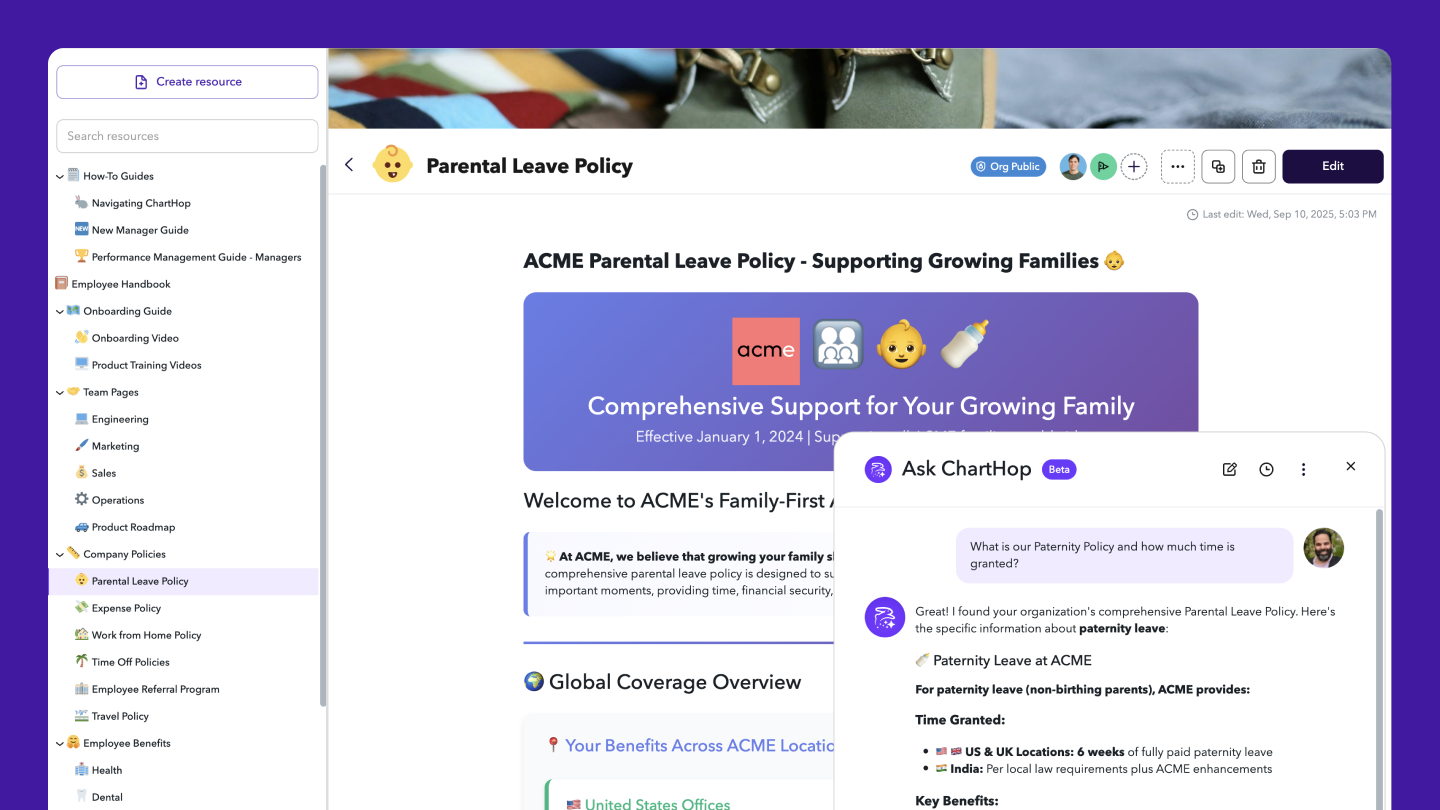
Official product screenshots published by ChartHop, not independently captured by us — see our Methodology.
Integrations
Integration list reflects what we found in vendor documentation at time of research — always confirm current integration depth directly with ChartHop before purchasing.
Customer Support
We haven't independently verified ChartHop's specific support channels, hours, or SLA tiers yet. Confirm current support details directly on ChartHop's website before purchasing.
Security & Compliance
We haven't independently verified specific security certifications (SOC 2, GDPR, etc.) for ChartHop yet. If handling sensitive HR or payroll data is a requirement, confirm current certifications directly with the vendor before signing a contract.
Ready to try ChartHop?
Visit the official site to see current pricing.
Some links on this page are affiliate links — see our Affiliate Disclosure. This never affects the verdict above; see our Methodology.
Alternatives to ChartHop
Visier
Analytics-first workforce planning for large enterprises
Gloat
AI-powered internal talent marketplace connecting employees to opportunities by skill
Pave
Real-time compensation benchmarking and planning platform
Syndio
Pay equity and workplace equity analytics for compensation governance
PayScale
Large-dataset compensation benchmarking and pay-equity platform
Comparisons Worth Reading
Gloat vs Degreed: Which Fits Your Skills Intelligence & Talent Mobility Needs?
Read article
Fuel50 vs Gloat: Which Fits Your Skills Intelligence & Talent Mobility Needs?
Read article
Syndio vs Textio: Which Fits Your DEI (Diversity, Equity & Inclusion) Needs?
Read article
Pave vs PayScale: Which Fits Your Compensation & Total Rewards Needs?
Read article
HiBob vs Visier: Which Fits Your People Analytics Needs?
Read article
Related Reviews



Related Coverage
Frequently Asked Questions
Core starts at a published $5/employee/month, with a $9,000 annual minimum contract — worth factoring in for very small teams where that minimum changes the effective per-employee cost.
A ChartHop feature that lets teams model org and headcount changes in a sandbox environment before committing them to the live org chart, useful for scenario planning during growth or reorganization.
Our Verdict
RecommendedChartHop looks like a fit for scaling startups and mid-sized companies needing clear headcount planning and org visibility. Based on our research, it's a strong option for that profile — see the Pros & Cons above for the specific trade-offs.
This verdict is based on publicly available research — vendor documentation, pricing pages, and third-party reviews — not first-hand, hands-on testing.
ChartHop
$5/employee/mo