
Culture Amp Review
Survey-first engagement and performance platform with AI-summarized open-text feedback
Starting at
Custom / Contact sales
Best for
Mid-to-large companies wanting structured engagement surveys with AI-summarized feedback
Quick verdict: Culture Amp is best for mid-to-large companies wanting structured engagement surveys with ai-summarized feedback — solid, with one trade-off worth reading before you commit.
Custom / Contact sales
The rating shown is a third-party rating from G2 (1,575 reviews), not an AI HR Atlas score — we have not independently tested this product. Our verdict below is based on publicly available research, not first-hand evaluation.
Culture Amp is a survey-first employee engagement and performance platform: its AI is centered on interpreting open-ended survey feedback at scale (summarizing themes, recommending focus areas from engagement drivers) rather than running continuous check-ins as its primary interface. It holds a 4.5/5 rating from 1,500+ G2 reviews. Pricing is entirely custom and quote-based — no tier or number is published anywhere — and it's positioned for mid-to-large companies rather than very small teams. AI HR Atlas has not independently tested this product.
Pros & Cons
Pros
- 4.5/5 rating from 1,500+ G2 reviews
- AI summarizes open-text survey feedback at scale and recommends focus areas from engagement drivers
- Structured 1-on-1 and action-planning tools connect survey results directly to manager follow-up
Cons
- No published pricing — every plan is a custom, annually-billed quote
- Positioned for mid-to-large companies; likely more platform than a very small team needs
Key Features
- AI-summarized open-text feedback analysis
- Engagement, performance, and wellbeing survey templates
- Structured 1-on-1 meeting and action-planning tools
- Skills Coach: AI-driven micro-learning delivered via Slack, email, or Teams
AI Capabilities
The specific AI-driven capabilities we found in our research on Culture Amp.
- AI-summarized open-text feedback analysis
- Skills Coach: AI-driven micro-learning delivered via Slack, email, or Teams
Pricing
Custom
Custom
Mid-to-large teams needing survey-driven engagement and performance tools
- AI feedback summarization
- Action planning
- Skills Coach
Screenshots
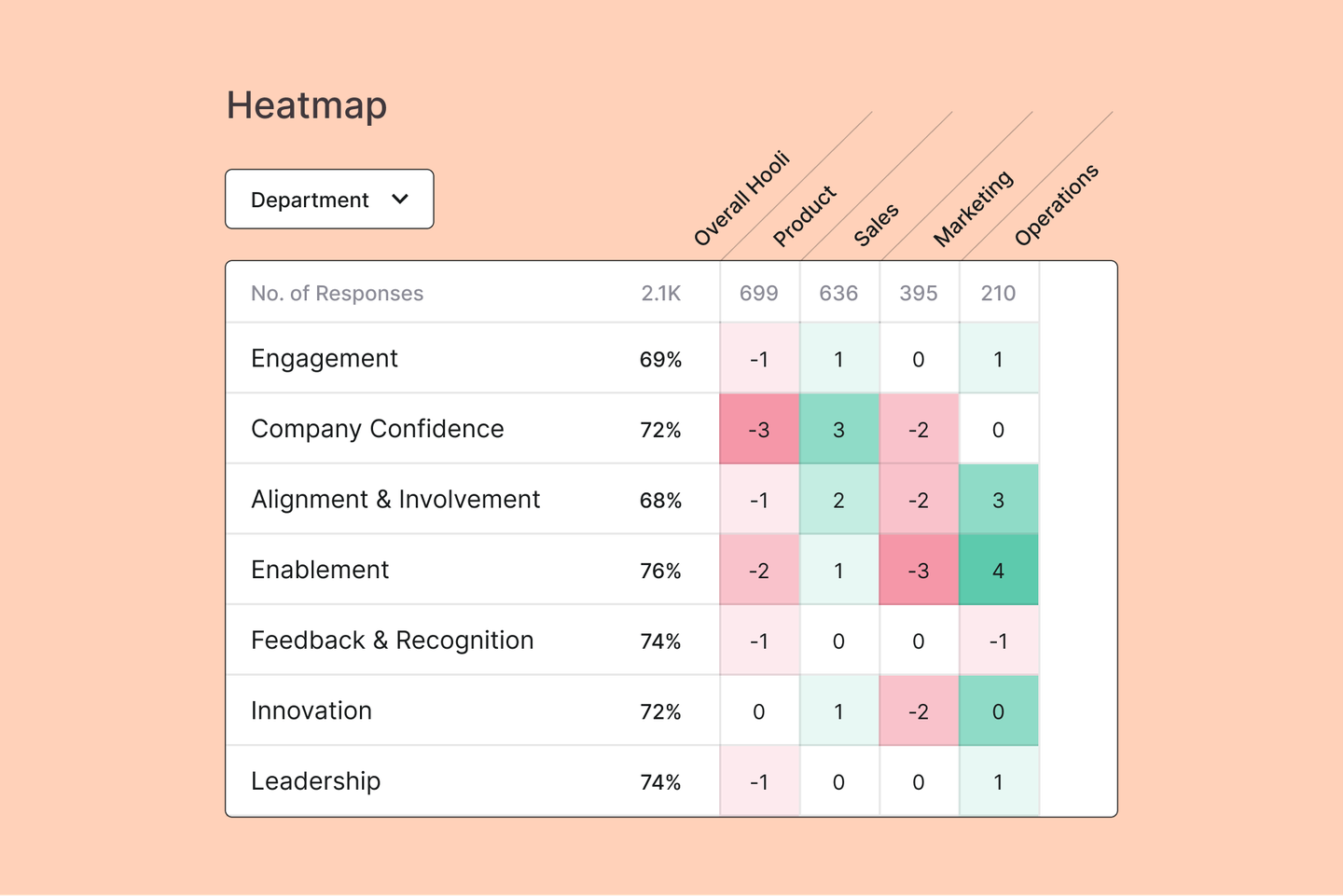
Official product screenshots published by Culture Amp, not independently captured by us — see our Methodology.
Integrations
Integration list reflects what we found in vendor documentation at time of research — always confirm current integration depth directly with Culture Amp before purchasing.
Customer Support
We haven't independently verified Culture Amp's specific support channels, hours, or SLA tiers yet. Confirm current support details directly on Culture Amp's website before purchasing.
Security & Compliance
We haven't independently verified specific security certifications (SOC 2, GDPR, etc.) for Culture Amp yet. If handling sensitive HR or payroll data is a requirement, confirm current certifications directly with the vendor before signing a contract.
Ready to try Culture Amp?
Get in touch to see if it's the right fit.
Some links on this page are affiliate links — see our Affiliate Disclosure. This never affects the verdict above; see our Methodology.
Alternatives to Culture Amp
Comparisons Worth Reading
Related Reviews


Related Coverage
Frequently Asked Questions
Culture Amp is built survey-first — its core AI value is interpreting open-text engagement survey feedback at scale. Lattice and 15Five center more on continuous check-ins and performance-review cycles, with surveys as one module among several.
No — pricing is entirely custom, billed annually, and depends on team size and product bundle.
Our Verdict
Worth a LookCulture Amp looks like a fit for mid-to-large companies wanting structured engagement surveys with ai-summarized feedback. It's worth considering, with a real trade-off to weigh before committing — check the Cons above.
This verdict is based on publicly available research — vendor documentation, pricing pages, and third-party reviews — not first-hand, hands-on testing.
Culture Amp
Custom / Contact sales